
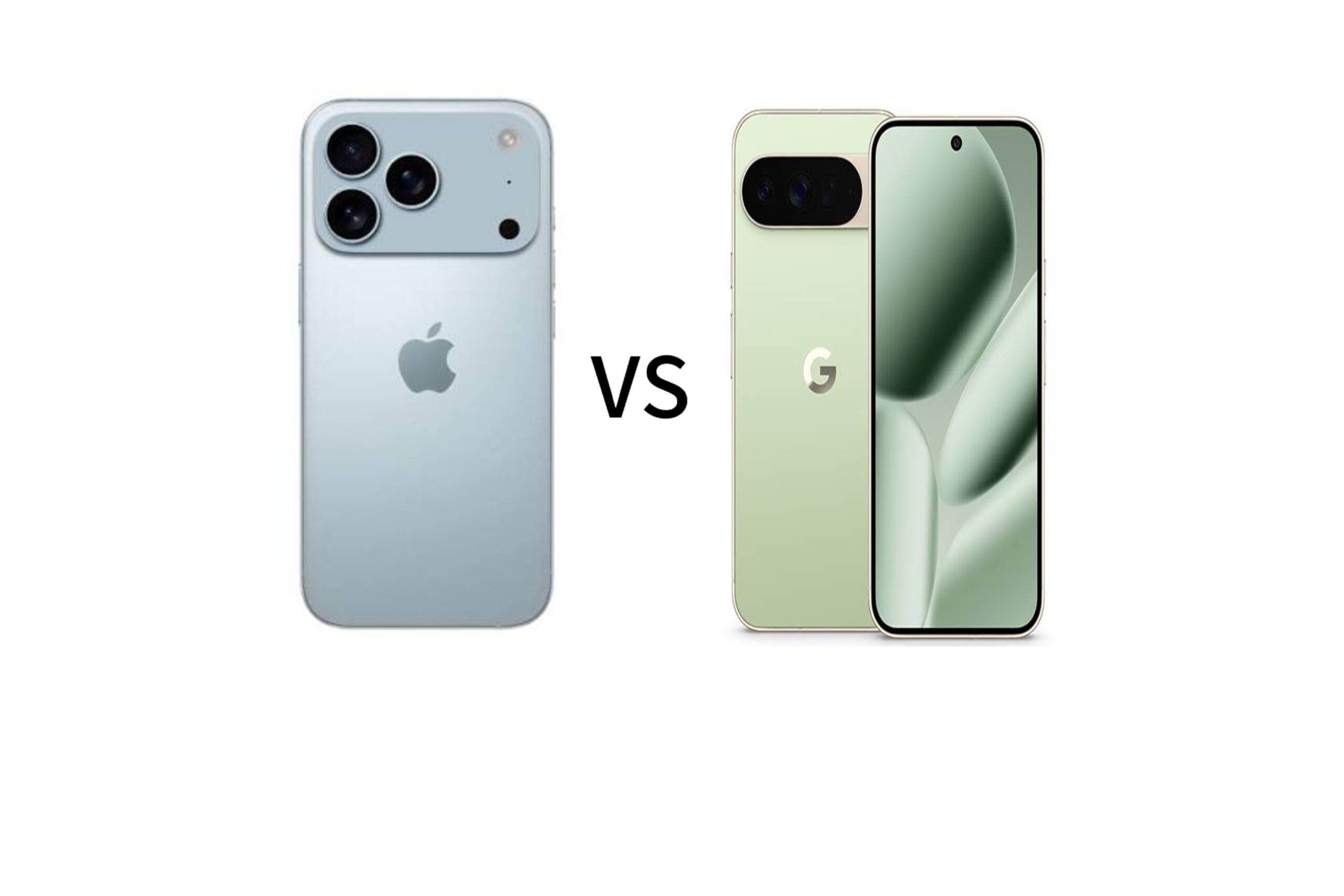
Apple and Google have once again squared off with their latest flagships: the iPhone 17 Pro Max and the Google Pixel 10 Pro XL. Both phones carry a $1,199 price tag, but the real question is: which one gives you more for your money? I’ve broken down the design, performance, cameras, AI, battery, and overall value to help you figure out where to spend that hard-earned cash.
Design and Build Quality
Apple leans on refinement, not reinvention. The iPhone 17 Pro Max has a titanium frame that feels rock-solid yet lighter in hand. The bezels are slimmer than ever, and the finish screams luxury. Google, on the other hand, keeps its signature two-tone aesthetic on the Pixel 10 Pro XL. It’s a little bolder, a little more playful, and arguably less “corporate” than Apple’s design language.
Both feel premium, but Apple caters to those who want timeless polish, while Google appeals to users who enjoy a phone with character.
Display and Performance
Apple’s 6.9-inch LTPO OLED, 120Hz, display is all about buttery-smooth scrolling and incredible HDR brightness. Powered by the A19 Pro chip, the iPhone 17 Pro Max doesn’t just run apps; it obliterates them. Gaming, multitasking, video editing — it all feels instantaneous.
The Pixel 10 Pro XL counters with a 6.8-inch LTPO OLED that’s nearly as sharp and vibrant. The new Tensor G5 processor isn’t as blisteringly fast as Apple’s chip, but Google offsets that with advanced AI-driven optimizations. Think real-time voice translation, context-aware assistance, and on-device smarts that feel genuinely futuristic.
Cameras and Photography
Apple stays the course with its triple-lens system but upgrades the sensors and computational photography. The iPhone 17 Pro Max captures natural, true-to-life images with stellar consistency. Video remains Apple’s crown jewel, with unmatched cinematic stabilization and Dolby Vision HDR.
The Pixel 10 Pro XL pushes boundaries in its own way. Its AI-enhanced camera system thrives in tricky lighting, capturing dramatic contrast and detail where the iPhone plays it safe. Google’s editing tools, like Magic Editor and enhanced object removal, give creators playful flexibility right out of the box.
If you want clean, realistic photography and world-class video, go Apple. If you like bold shots and smart post-processing, go Pixel.
AI and Software Experience
This is where Google flexes. The Pixel 10 Pro XL feels like the future thanks to its deep AI integration. From call screening that feels eerily human to predictive suggestions that save you taps, it’s a phone that actively helps you more than it distracts you.
Apple is catching up. iOS 26 introduces Apple Intelligence, with AI features like text rewriting, context-aware photo searches, and smarter Siri. But Google’s AI feels more woven into the DNA of the phone, while Apple’s AI feels like an add-on to an already smooth experience.
Battery and Charging
Apple’s efficiency shines with its custom silicon. The iPhone 17 Pro Max comfortably pushes past a full day of heavy use, and with MagSafe, charging is smooth and integrated into the ecosystem.
Google’s Pixel 10 Pro XL also delivers solid endurance, with improvements in adaptive battery 5200mAh learning your habits. The fast charging edge goes to Google, which juices up more quickly than Apple’s more conservative approach.
Price and Value
For once, Apple and Google are playing on the same field. Both the iPhone 17 Pro Max and the Google Pixel 10 Pro XL start at $1,199. That means price alone won’t sway your decision — it’s all about priorities.
With Apple, you’re paying for unmatched performance, cinematic video quality, and a polished ecosystem that just works. With Google, you’re buying into smarter AI tools, more adventurous photography, and a device that feels a little less traditional.
At the same price, the value question shifts from “which is cheaper?” to “which fits your lifestyle better?”
Verdict
So, iPhone 17 Pro Max vs Google Pixel 10 Pro XL — who wins? The truth is, both do in their own lanes. Apple wins if you care about raw power, video quality, and a frictionless ecosystem. Google wins if you want AI magic, bold photos, and a phone that feels like it’s constantly learning with you.
If you’re deeply tied into either ecosystem, your choice is obvious. But if you’re starting fresh, the decision is more exciting than ever — two equally priced flagships, two very different visions of the smartphone’s future.