
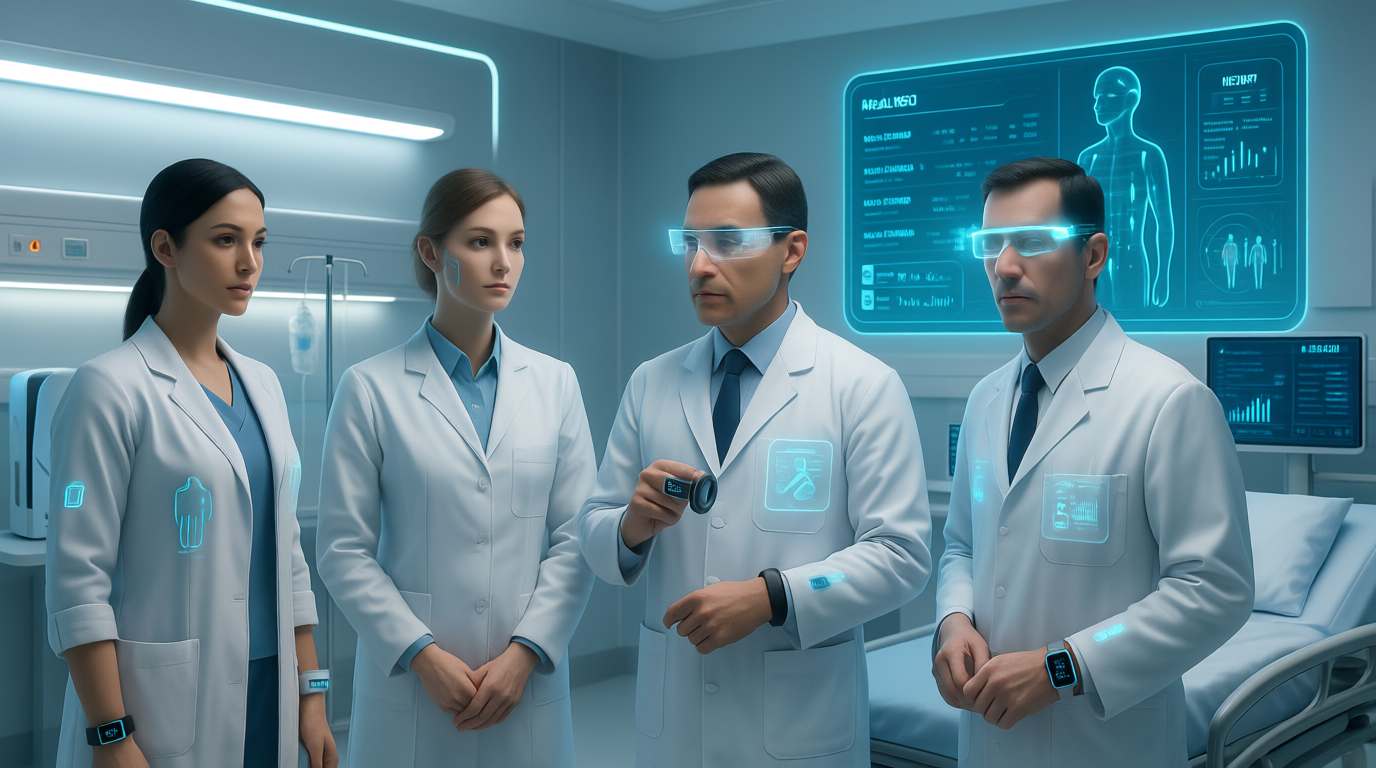
The healthcare industry has entered a new era where technology is not an accessory but a necessity. Among the most disruptive changes are the wearable tech trends for healthcare in 2025, which are reshaping patient monitoring, treatment, and prevention strategies. No longer limited to fitness tracking, wearable devices are now clinical tools that deliver real-time data, improve patient outcomes, and bridge the gap between medical professionals and individuals managing their health. By 2025, the scope of wearables in healthcare is broader than ever, and the breakthroughs are redefining what it means to stay connected to health.
Why 2025 Marks a Turning Point for Healthcare Wearables
Over the last decade, wearables evolved from consumer gadgets into vital healthcare solutions. Hospitals, clinics, and even insurance providers have adopted these devices as integral to care delivery. In 2025, the impact is magnified due to improved sensors, artificial intelligence integration, and stronger connectivity through 5G and beyond. Wearables now move beyond step counts and calorie estimates, offering clinical-grade insights into cardiovascular health, glucose monitoring, sleep disorders, and even early disease detection.
The significance of wearable tech trends for healthcare in 2025 lies in how these devices are no longer just personal gadgets—they are becoming central nodes in a digital healthcare ecosystem where prevention, diagnosis, and treatment converge.
Remote Cardiac Monitoring Devices
One of the most important advancements in 2025 is remote cardiac monitoring. Heart health is a global priority, and wearable devices now provide cardiologists with real-time ECG data from patients, allowing early detection of arrhythmias and other life-threatening conditions. Instead of waiting for hospital visits, patients can wear lightweight sensors that continuously transmit their heart rhythm to medical teams.
This shift is transformative for chronic disease management. Millions of patients who once depended on in-hospital monitoring now gain freedom without losing safety. Remote cardiac wearables reduce hospital readmissions, provide immediate alerts for abnormalities, and even integrate predictive algorithms that warn of potential cardiac events before they occur.
Continuous Glucose Monitoring Wearables
For people with diabetes, continuous glucose monitoring has long been a challenge. In 2025, wearable sensors are smaller, more accurate, and capable of sending blood sugar data directly to smartphones or medical dashboards. This real-time tracking empowers patients to make immediate lifestyle or dietary changes while also allowing doctors to optimize treatment plans with live data instead of occasional finger-prick results.
The advancement goes further with AI-enhanced glucose wearables. They not only measure glucose but also analyze trends, predict spikes or drops, and suggest adjustments in insulin or food intake. For millions living with diabetes, this development represents liberation from uncertainty and greater control over daily life.
Smart Wearables for Sleep and Stress Management
Sleep disorders and stress-related conditions have become pressing global health issues. The wearable tech trends for healthcare in 2025 place significant focus on devices that track sleep cycles, brain activity, and stress markers like cortisol levels or heart rate variability. Unlike consumer-grade sleep trackers of the past, the new generation offers clinical accuracy and actionable insights.
These devices do more than monitor—they intervene. Through biofeedback, haptic signals, or auditory cues, they guide users toward relaxation, improved sleep patterns, and better resilience against stress. Physicians use the data for diagnosing sleep apnea, insomnia, or chronic fatigue, turning wearables into tools for treating conditions that were once difficult to assess outside specialized clinics.
AI-Powered Fitness and Rehabilitation Wearables
Rehabilitation and fitness monitoring has expanded into a more clinical role in 2025. AI-powered wearables track patient movement with precision, analyzing muscle activity, joint stress, and posture in real time. This information helps physiotherapists design more effective recovery programs for patients recovering from injuries or surgeries.
For athletes and active individuals, these wearables provide early warnings for potential injuries by identifying irregular movement patterns. The devices do not just record data; they coach users with corrective recommendations, essentially acting as personal physiotherapists. This evolution means wearable tech is not only about monitoring health but actively improving it.
Wearables for Early Disease Detection and Prevention
The most ambitious goal of wearables has always been early disease detection. In 2025, advancements in biosensors enable wearables to detect subtle changes in biomarkers linked to diseases like cancer, kidney failure, and neurological disorders. These devices continuously analyze blood, sweat, or skin chemistry to identify warning signs long before symptoms appear.
Prevention shifts from theory to reality. By alerting users and physicians early, wearables reduce the burden on healthcare systems and improve survival rates for diseases traditionally diagnosed late. This represents one of the most revolutionary impacts of wearable technology in healthcare, as prevention becomes more achievable than treatment.
How Wearable Tech is Changing Doctor-Patient Relationships
Beyond the devices themselves, the role of wearables in healthcare is reshaping how doctors and patients interact. Data is no longer limited to annual checkups or isolated lab tests. Physicians now access continuous health streams from their patients, enabling them to make decisions based on dynamic, real-world information.
Patients, in turn, become active participants in their care rather than passive recipients. The constant feedback loop empowers individuals with awareness and responsibility, creating a partnership model of healthcare that has long been advocated but rarely implemented effectively.
The Role of Data and Security
As wearable tech grows in healthcare, data security becomes a core issue. It’s not just about sensors and AI—they are about ensuring sensitive health data remains private and secure. Encryption standards, cloud security systems, and regulatory frameworks are evolving to protect patient information while still enabling its use for treatment and research.
Healthcare providers must balance innovation with trust. Patients will only embrace wearables if they feel confident their most intimate data is protected. This means that alongside technical advancements, ethical handling of data is a defining feature of wearable healthcare in 2025.
The Accessibility Question
Affordability has historically limited access to advanced wearables. However, 2025 shows a trend toward broader accessibility. Governments and insurers increasingly subsidize wearable health devices because of their proven ability to prevent costly medical interventions. By funding access to wearables, healthcare systems save resources long-term while improving patient outcomes.
This shift means wearable tech is no longer a luxury for tech-savvy individuals but a common part of global healthcare strategies. Accessibility ensures the benefits of wearables extend beyond developed nations, bringing modern health management to underserved communities as well.
Final Thoughts
The wearable tech trends for healthcare in 2025 highlight a decisive transformation in how health is monitored, managed, and preserved. From cardiac monitoring to glucose management, sleep optimization, AI-powered rehabilitation, and early disease detection, wearable devices are becoming as essential as stethoscopes and thermometers once were. They bring accuracy, immediacy, and empowerment to both patients and professionals.
Healthcare is not waiting for the future—it is being reshaped now. The rise of wearable tech is not an accessory shift but a fundamental change in how care is delivered and how health is lived. As it continues to evolve, the boundary between daily life and clinical care will dissolve, creating a new standard where health management is always on, always connected, and always proactive.